





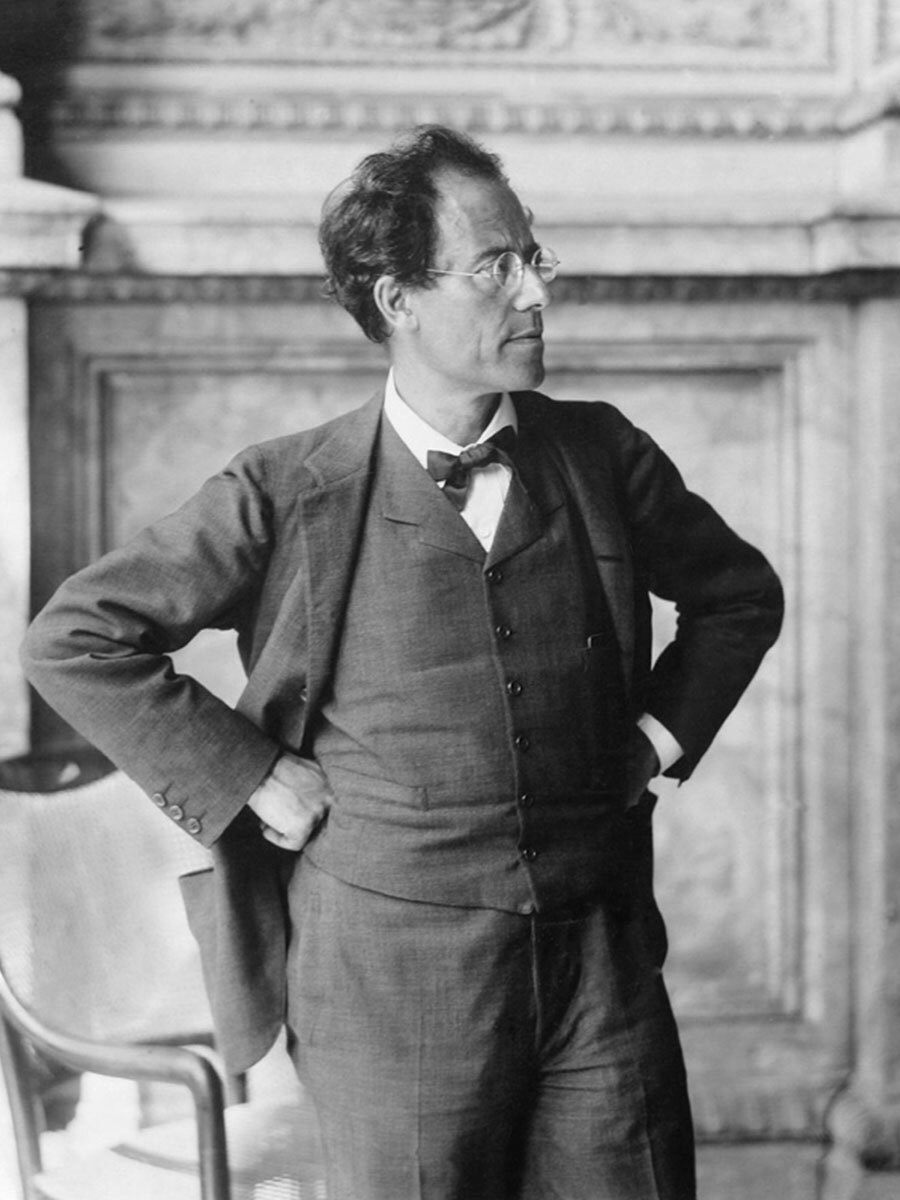
Gustav Mahler (1860–1911)
Gustav Mahler war einer der erfolgreichsten Dirigenten seiner Zeit sowie einer der größten Symphoniker überhaupt.
Seine Symphonien sind heute ein fundamentaler Bestandteil des klassischen Konzertrepertoires und markieren den Aufbruch von der reichen symphonischen Tradition des 19. Jahrhunderts in die Moderne.
Trotz Mahlers Bemühen kam es zu seinen Lebzeiten zu keiner Zusammenarbeit mit Breitkopf & Härtel. Anlässlich des 300-jährigen Verlagsjubiläums hat der Verlag 2019 mit der Publikation sämtlicher Symphonien Gustav Mahlers begonnen.
Gustav Mahler wurde am 7. Juli 1860 in Kalischt (Böhmen), heute Kaliště in Tschechien, geboren. Nach erstem musikalischen Unterricht begann der junge Mahler im Alter von 15 Jahren am Wiener Konservatorium ein Musikstudium in den Fächern Klavier, Komposition und Harmonielehre. An der Universität Wien war er ab 1877 u.a. Student von Anton Bruckner. Mahlers erste Versuche als Komponist blieben zunächst erfolglos, seine Karriere als Operndirigent verlief hingegen erfolgreicher. So erhielt er innerhalb von zehn Jahren mehrere Anstellungen, u.a. als Kapellmeister in Olmütz und Laibach, als Chordirektor am Königleichen Theater in Kassel, als Opernkapellmeister am deutschen Landestheater in Prag und am Stadttheater in Leipzig sowie als Operndirektor in Budapest, bis er 1891 erster Kapellmeister am Hamburger Stadttheater wurde. In Hamburg gelang es Mahler sein Leben so einzurichten, dass es ihm Raum für konstantes Komponieren bot. Es entstanden die 2. und zu weiten Teilen 3. Symphonie sowie eine Neufassung seiner 1. Symphonie.
1897 bekam Mahler den herausragenden Posten als Kapellmeister und später als Direktor der Wiener Hofoper, der heutigen Wiener Staatsoper, die er auf ein bis dahin unerreichtes künstlerisches Niveau führte. Allmählich wandelte sich sein Bild in der Öffentlichkeit und es gelang Mahler, sich immer mehr als Komponist zu etablieren.
Schon im Jahre 1885 wurde eine antisemitische Kampagne gegen Mahler gestartet, woraufhin er 1897 vom Judentum zum Katholizismus konvertierte. Auch in den folgenden Jahren sah er sich antisemitischen Anfeindungen ausgesetzt. Weitere tiefe Einschnitte im Leben Mahlers waren der Tod seiner Tochter Maria Anna und die Diagnose seiner Herzerkrankung.
1902 heiratete Mahler Alma Maria Schindler. 1907 trat Mahler von seinem Amt des Direktors der Wiener Hofoper zurück, verließ Europa und ging als Kapellmeister an die Metropolitan Opera in New York. 1909 übernahm er zusätzlich die musikalische Direktion der New York Philharmonic Society.
Bereits 1911 kehrte der schwerkranke Mahler nach Europa zurück und verstarb am 18. Mai 1911 in Wien.
Mahler hinterließ zahlreiche Werke, darunter zehn Symphonien (die 10. Symphonie ist unvollendet), Das Lied von der Erde (Symphonie für Tenor, Alt [oder Bariton] und Orchester), Lieder mit Orchester (u.a. 4 Lieder eines fahrenden Gesellen, Lieder aus Des Knaben Wunderhorn, Kindertotenlieder), das Chorwerk Das klagende Lied und Lieder mit Klavier.